


BUYING GUIDE / BIKE GEARS
What Is Shimano CUES?
A beginner’s guide to everyday gearing, LINKGLIDE and choosing your next bike.

If you have been comparing bikes, you may have noticed “Shimano CUES” appearing in the specifications. But what does it actually mean—and should it influence which bike you choose?
Shimano CUES is a family of bicycle components designed around dependable everyday riding. For someone buying a bike, its main appeal is a drivetrain—the parts that transfer your pedalling effort to the rear wheel—with an emphasis on smooth gear changes and durability.
You do not need to memorise component codes to understand it. Here are the essentials.
What does Shimano CUES do?
When a bike lists a “Shimano CUES drivetrain”, it is describing its gearing system, rather than its frame, suspension or wheel size.
The key parts you will encounter are:
- Shifter: the control you use to change gears.
- Rear derailleur: the mechanism that moves the chain between the rear gears.
- Cassette: the cluster of toothed gears attached to the rear wheel.
- Chainring: the toothed ring at the pedals.
CUES comes in different configurations, including 9-, 10- and 11-speed options, and versions for both flat and drop handlebars. It is not one identical package fitted to every bike. Shimano’s CUES overview explains the range.
For a buyer, that means checking the actual bike specification—not just spotting the CUES name.

Why is LINKGLIDE important?
You will often see LINKGLIDE mentioned alongside CUES, particularly on everyday mountain bikes and hybrids.
LINKGLIDE is Shimano’s drivetrain technology focused on lasting shifting performance. Its cassette teeth have a thicker base and a reshaped profile designed to resist wear. The shifting design also helps the chain move between gears with less jolt through the pedals.
The practical attraction is straightforward: a system designed to keep working smoothly as you add more kilometres.
You may also see Shimano’s “up to three times” durability claim. This comes from its comparison with HYPERGLIDE under specified test conditions; it is not a promise that every chain or complete drivetrain will last three times longer. Real-world wear still depends on riding conditions, maintenance and use. Shimano explains the technology and test conditions here.
Think of LINKGLIDE as a durability-focused design, not permission to forget about looking after your bike.
Is Shimano CUES 9-speed enough?
For many everyday riders, a suitable 9-speed setup can provide the gears they need. The important word is suitable: gear count alone does not tell you how easy a bike will be to pedal uphill.
On a 1×9 drivetrain, there is one chainring at the front and nine sprockets at the back. You change gears using one shifter, without having to choose between front chainrings.
When comparing bikes, look at three things:
- The easiest gear: is it low enough for your hills?
- The hardest gear: does it suit the speeds you normally ride?
- The steps between gears: can you find a comfortable pedalling rhythm?
More gears can offer closer steps, a wider range, or a combination of both, depending on the components. They do not automatically make every climb easier.
A larger rear sprocket makes pedalling easier when the other relevant factors stay the same. Front chainring size matters too, so compare the complete gearing rather than choosing by “9-speed” or “11-speed” alone.
Who is CUES for?
Shimano positions CUES for a broad range of everyday riding, including commuting, leisure rides, mountain biking and e-bikes, with options for recreational road and gravel riding too. Explore Shimano’s CUES range.
Our recommendation is to consider it when dependable daily use matters more to you than chasing a particular component tier.
If you are shopping for a commuter or a bike for weekend paths and trails, ask whether its gearing suits those rides. If you have specific racing or demanding technical-trail requirements, compare the exact components and the capabilities of the whole bike.
The CUES label is useful information, but it does not define what every CUES-equipped bike is suitable for.
A real example: the Horacio Blaze CUES
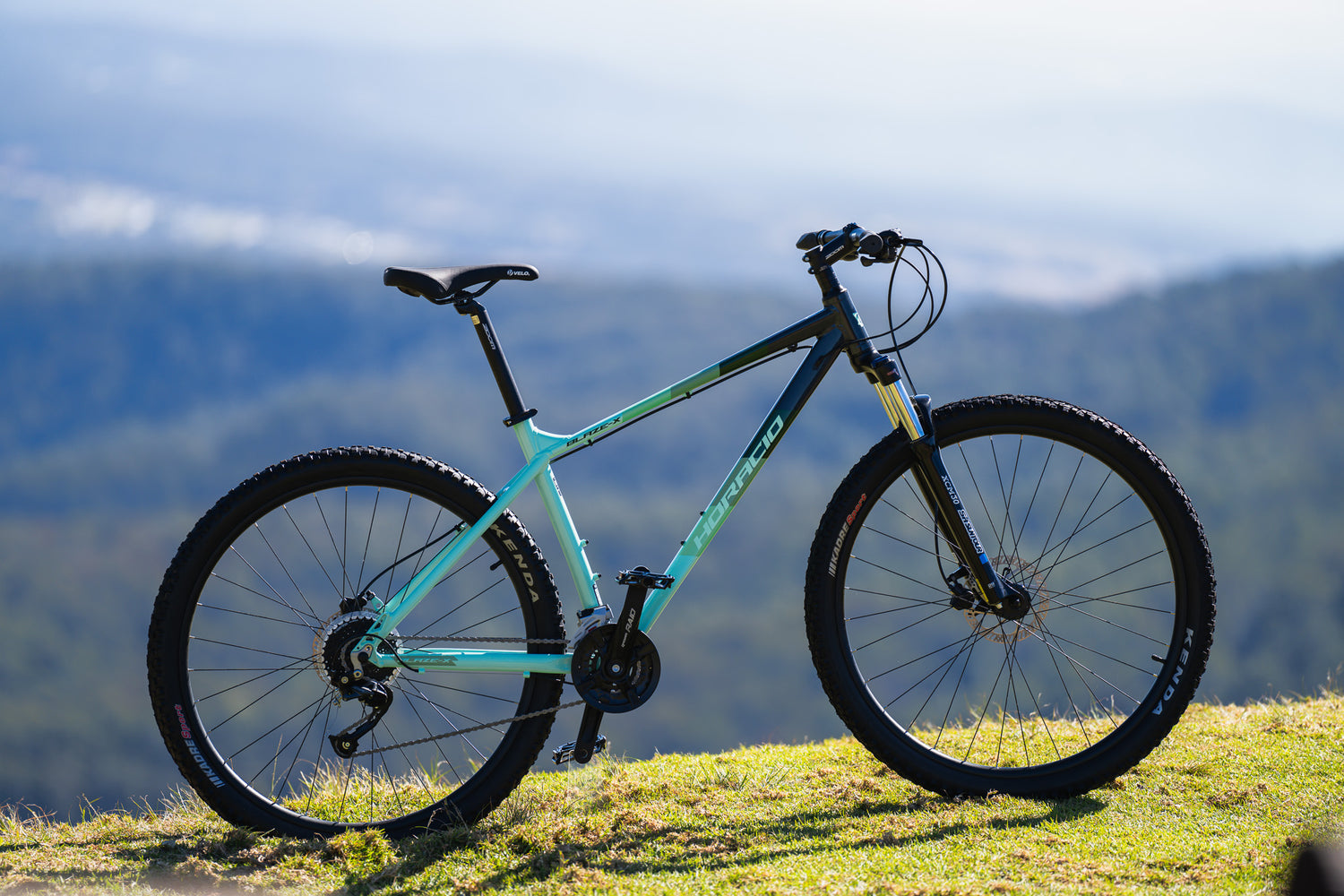
The Horacio 2026 Blaze CUES uses a Shimano CUES 1×9 drivetrain with an 11–46T cassette.
In plain English, that means one front chainring and nine rear gears, with the rear sprockets ranging from 11 to 46 teeth.
It shows why “only nine gears” does not tell the whole story: the actual gearing deserves a closer look.
Still, choose the complete bike. Frame fit, brakes, tyres and riding position all matter alongside the drivetrain. If wheel size is another question on your list, our 27.5 vs 29 mountain bike wheel guide explains the main differences.

Frequently asked questions
Is Shimano CUES good for beginners?
Yes. Its focus on everyday performance makes it worth considering for a first bike. A 1× version also keeps gear selection straightforward, with one shifter controlling the rear gears. Choose gearing and a bike that suit your routes.
Is Shimano CUES only for electric bikes?
No. CUES is available for both conventional bikes and e-bikes. You do not need a motor to benefit from a drivetrain designed with durability in mind. Shimano’s guide covers the different applications.
Can I mix CUES with other Shimano parts?
Do not assume parts are compatible because they share the Shimano name—or even the CUES name. Replacement and upgrade choices need to match the specific system. Check model numbers against Shimano’s compatibility information, or ask a workshop before ordering.
Does a CUES drivetrain mean the bike has hydraulic brakes?
No. Gearing and brakes are separate specifications. Check the brake details on the individual bike rather than assuming that CUES shifting guarantees a particular brake system.
Need help choosing?
Not sure which Horacio bike, gearing setup or frame size suits you? Email our team at info@horaciobikes.com.au with the model you are considering and the kind of riding you plan to do. We will help you understand the options.