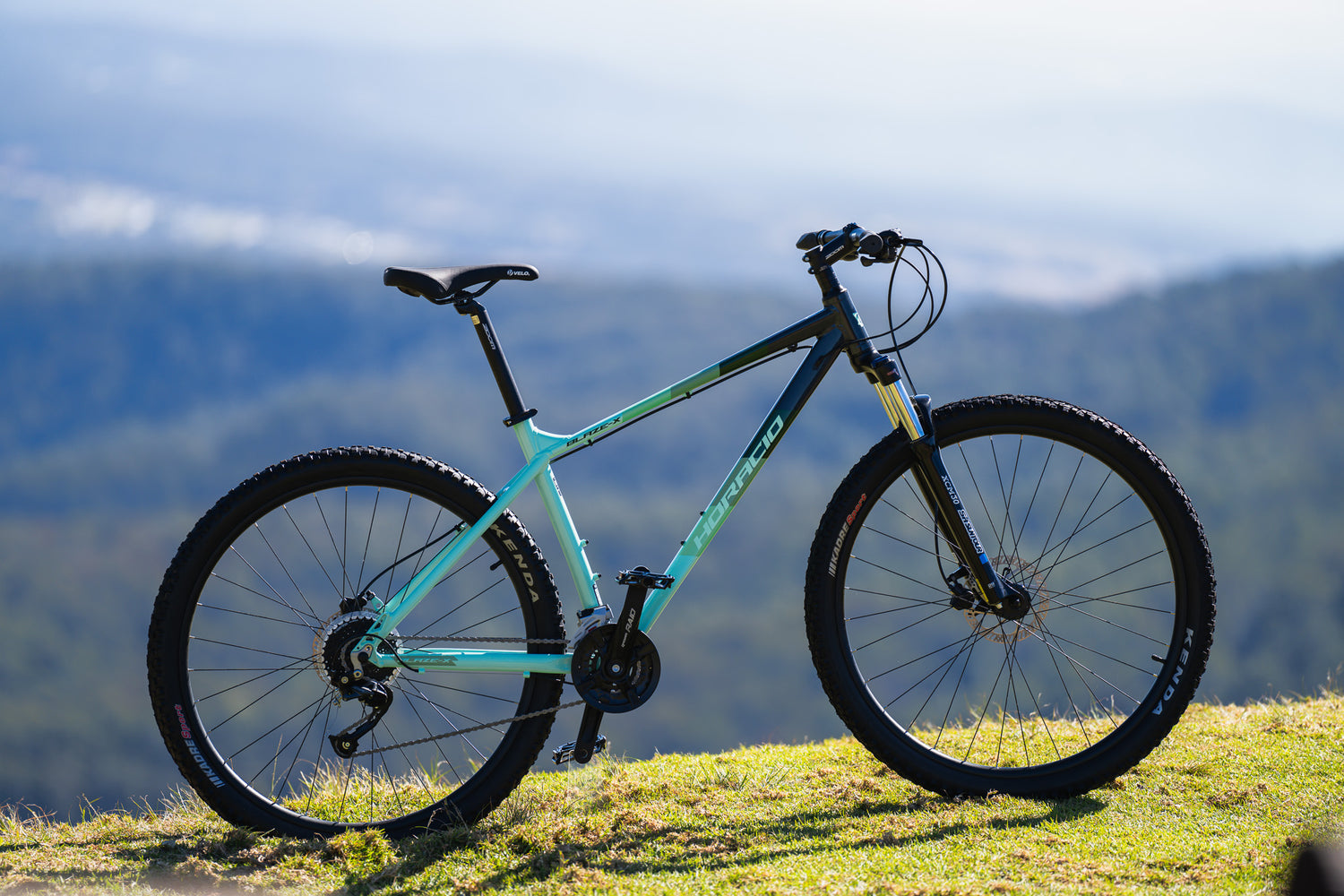



BUYING GUIDE / YOUR FIRST MTB
Buying Your First Mountain Bike: What to Look For
Understand the specifications—and ask the right questions before you buy.

You know your budget. You have found a few bikes you like. Then you open the specifications: aluminium frame, hydraulic brakes, Shimano gears, suspension fork.
Which details actually matter?
You do not need to become a bike expert before buying your first mountain bike. Start with where you will ride and whether the bike fits, then compare the parts that affect comfort, control and everyday use.
1. Start with where you will ride
Tell the shop what a normal ride will look like: family outings, riding to school, gravel paths or purpose-built mountain bike trails.
These are different jobs. A mountain-bike appearance does not automatically mean a bike is suitable for jumps, drops or demanding trails.
For many beginners, a hardtail—a bike with front suspension but no rear suspension—is a sensible starting point. It has fewer suspension components to maintain, and generally costs less than a comparable full-suspension bike.
Ask: “Is this model suitable for the riding I actually plan to do?”
2. Get the fit right before comparing upgrades
A better component cannot make an incorrectly sized frame fit you.
Check the model’s size guide and, if possible, try the bike. Can you reach the handlebar and brake levers comfortably? Can you stand over the frame and get on and off confidently?
Wheel size is not frame size. A 27.5 inch mountain bike and a 29 inch mountain bike can each come in different frame sizes. Bigger wheels do not automatically mean a better bike—or the right fit.
For a child, avoid choosing a bike they struggle to control simply because they might grow into it.
Ask: “Which frame size suits me, and why?”
Read more: 27.5 vs 29 Mountain Bike Wheels.
3. Read these four lines on the specification sheet
You do not need to understand every component code. Start here:
| Specification | What it means | What to check |
|---|---|---|
| Frame | The bike’s main structure | Material, correct size and complete-bike weight |
| Gears / drivetrain | The parts that turn pedalling into movement | Component models and gears suitable for your hills |
| Brakes | The system that slows and stops you | Brake type, model and comfortable lever reach |
| Fork | The part holding the front wheel; suspension versions absorb bumps | Intended use, model and available adjustments |
Frame: aluminium or steel?
Both materials can make a useful bike. Aluminium is common on entry-level mountain bikes; basic steel-framed bikes are often heavier.
But the material label is not the whole story. Frame construction and the other components affect the bike’s total weight too. If you need to lift it into a car or carry it upstairs, ask for the complete-bike weight, not just the frame material.
Gears: more is not automatically better
“21-speed” does not automatically beat “9-speed”.
A 1×9 system has one front chainring and nine rear sprockets. A typical 3×7 system has three front chainrings and seven rear sprockets, giving 21 combinations—but some overlap.
What matters is having an easy enough gear for your hills, useful gear spacing and straightforward operation.
Shimano is a bicycle-component manufacturer, not one single level of equipment. “Shimano gears” alone does not tell you which parts are fitted.
Ask for the shifter, rear derailleur and cassette or freewheel models. The shop should be able to explain the difference without expecting you to memorise the codes.
For example, Shimano CUES is a component range designed around practical, durable everyday riding. Our beginner’s guide to Shimano CUES explains it in plain English.

Brakes: look beyond “disc brakes”
Mechanical disc brakes use a cable. Hydraulic disc brakes use fluid and generally need less hand effort while making braking force easier to control. Well-adjusted mechanical brakes can still suit everyday riding.
Check the actual brake model, whether the levers suit your hands, and whether replacement pads are readily available. Hydraulic does not mean maintenance-free.
Fork: more suspension is not always better
The suspension fork helps absorb bumps at the front wheel. “Travel” describes how far it can move.
Do not choose a bike simply because it advertises more travel or a lockout switch. Ask whether the fork suits your weight and intended riding. A lockout reduces suspension movement; it is a feature, not a quality rating.
4. Ask what you are getting for the extra money
When two bikes look similar but have different prices, ask the shop to explain the difference.
Is the extra money buying easier braking, a lighter bike, more suitable gearing or a better fork? Will you notice that benefit on your usual rides?
For a first bike, our priority is correct fit, suitable intended use, dependable braking and useful gearing—before cosmetic extras.
Also check what the price includes: delivery, assembly, a safety check and any accessories. Leave room in your budget for a suitable helmet, pump and ongoing servicing.
5. Ask these questions before paying
- Is this bike suitable for my intended riding?
- Is this the right frame size for me?
- What are the actual gear, brake and fork models?
- How will the bike arrive, and what needs doing before the first ride?
- Who can help with servicing and replacement parts?
You do not need the longest specification sheet or the most gears. You need a bike that fits, suits your riding and comes with information you understand.
Comparing Horacio bikes? Email info@horaciobikes.com.au with your height, budget, where you plan to ride and the models you are considering. We can help you understand the differences.